|
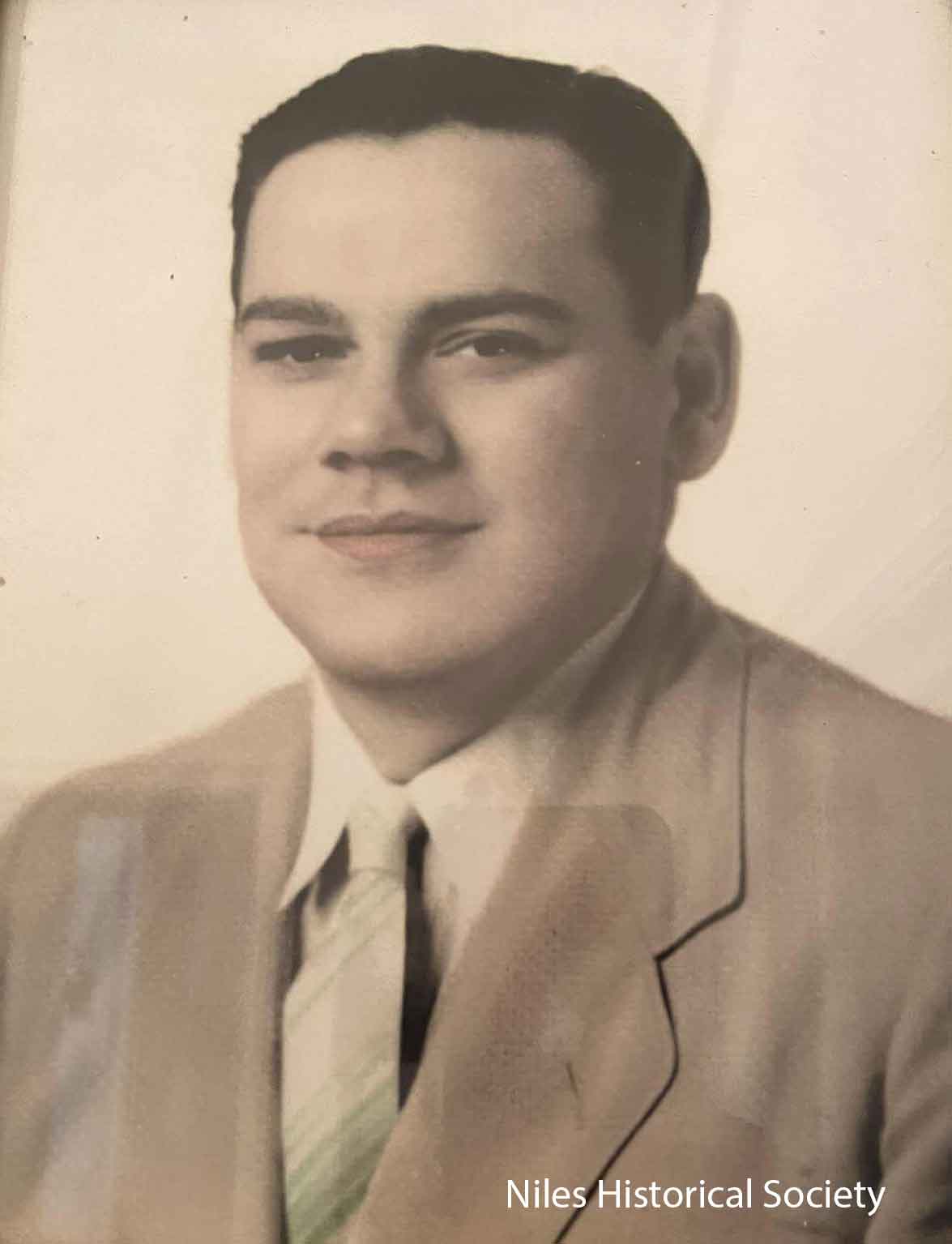
Dr. Abraham Hoodin
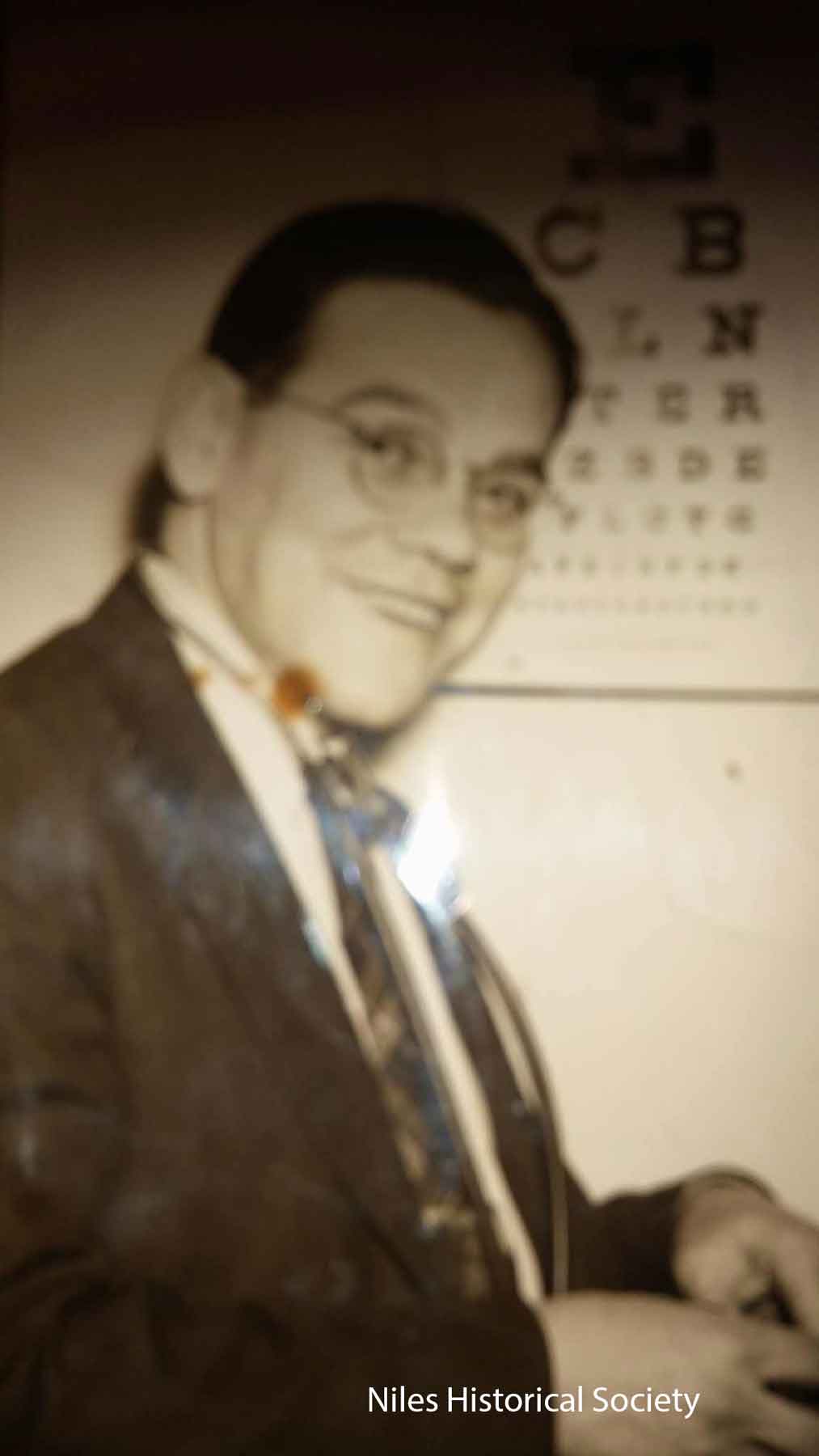
Dr. Hoodin in his office. Dr. Hoodin experienced all the changes that have occurred in being a General Practioner from the 40s, 50s, and 60s. His office was on the 4th floor of the Niles Bank Building where he administered patients with various medical needs. Dr. Hoodin also made house calls and arrived with his black medical bag for treatments. |
Dr. Abraham
Hoodin The new health commissioner, who spent much of his youth in Cincinnati, Ohio is a graduate Cincinnati Woodward High School. He received his pre-medical and medical schooling at the University of Cincinnati earning his M.D. degree in 1933. After two years of interning, Dr. Hoodin joined the Government Medical Service and served as a physician at the Crow Indian reservation near Billings, Montana for three years. In 1938 he served in the U.S. Public Health Service at Marine Hospital (later became Cleveland Clinic), where he met a nurse who would become his wife, for two years until he came to Niles to open an office here as a general practioner. Later in 1940 he joined the U.S. Army and served in a medical regiment in the European Theatre for five years with the rank of Captain. “A list of areas Dr. Hoodin was stationed: Tunis, Tunisia, Anzio, England, Belgium during the Battle of the Bulge, Nancy and Normandy, France (after the invasion not during), and Munich, Germany. In Germany my Dad facilitated the restoration of the public services such as water and sewage treatments. He also cared for local residents and victims in the concentration camps. He then received orders to head to Japan. While in route, the war ended and the troop ship was ordered to Newport News, VA.He was discharged and he, my mother and two older brothers moved to 317 Cedar Street. I was born about 1 1/2 years later and about 2 years after that wemoved to 113 Washington Avenue.” by Marsha Hoodin Niles Daily Times May 1, 1967 Dr. Hoodin, who had called on patients in the hospital Saturday morning, was playing his first game of golf this season with three other doctors when he was stricken. He was appointed temporary Health Commissioner January 1, 1947, and received the permanent appointment Septemer 16, 1957. Born December 12, 1909, in Russia, he was the son of Nathan and Frieda Hoodin and came to the United States as an infant. He came to Niles to practice medicine for a short time before enlisting in the Medical Corps in August 1942. He was discharged in 1945 as a Captain, after serving in Europe. A graduate of the University School of Medicine
in 1932, he was a member of the General Practioners Association,
a member and past president of the medical staff of Trumbull Memorial
Hospital and an associate staff member at St. Joseph Hospital.
He was a member of the county, state and national medical association. |
| Medical Experiences of Dr. Abraham
Hoodin. |
|
|
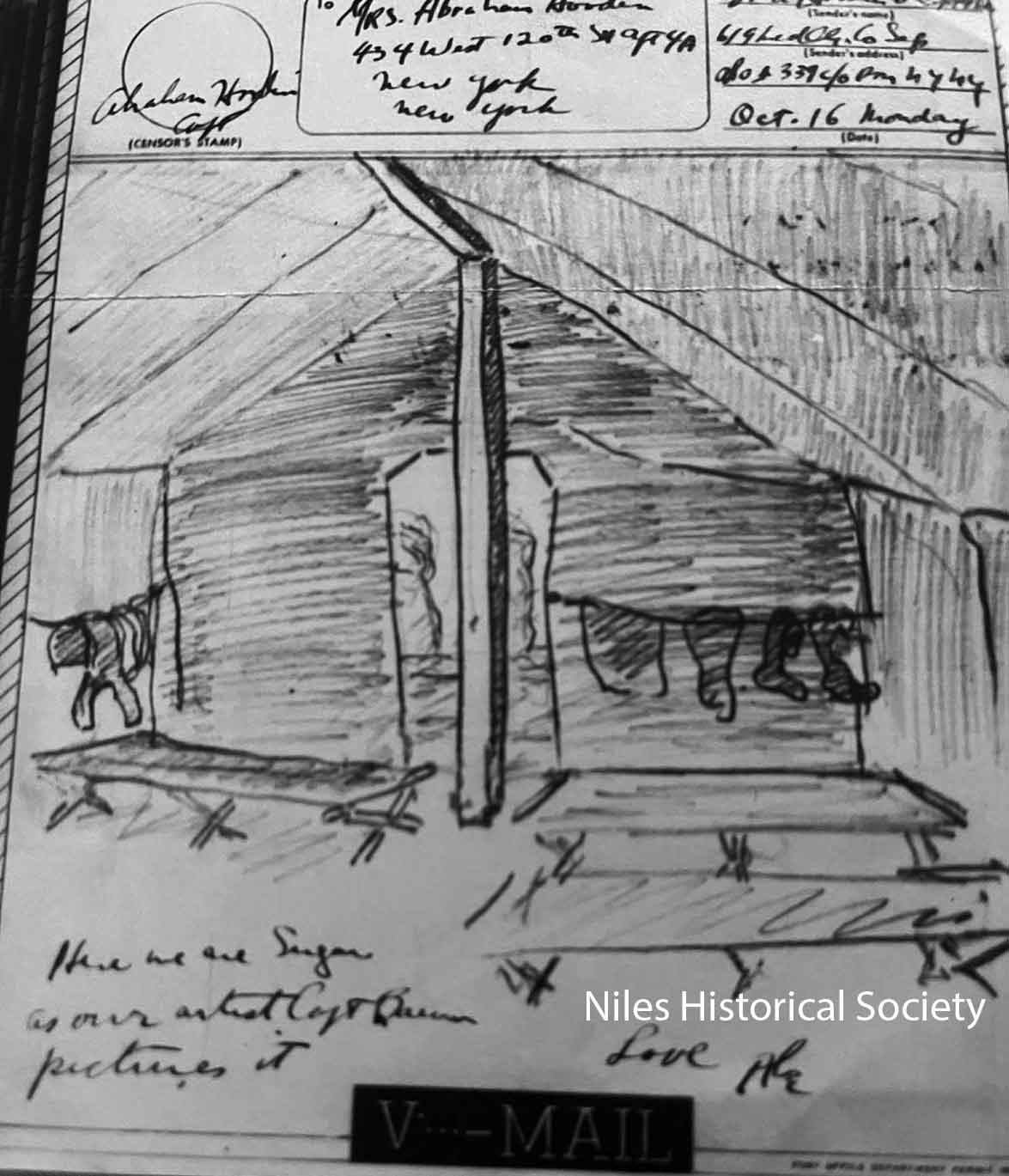
Drawing of the interior of the tent Dr. Hoodin shared with other Doctors.
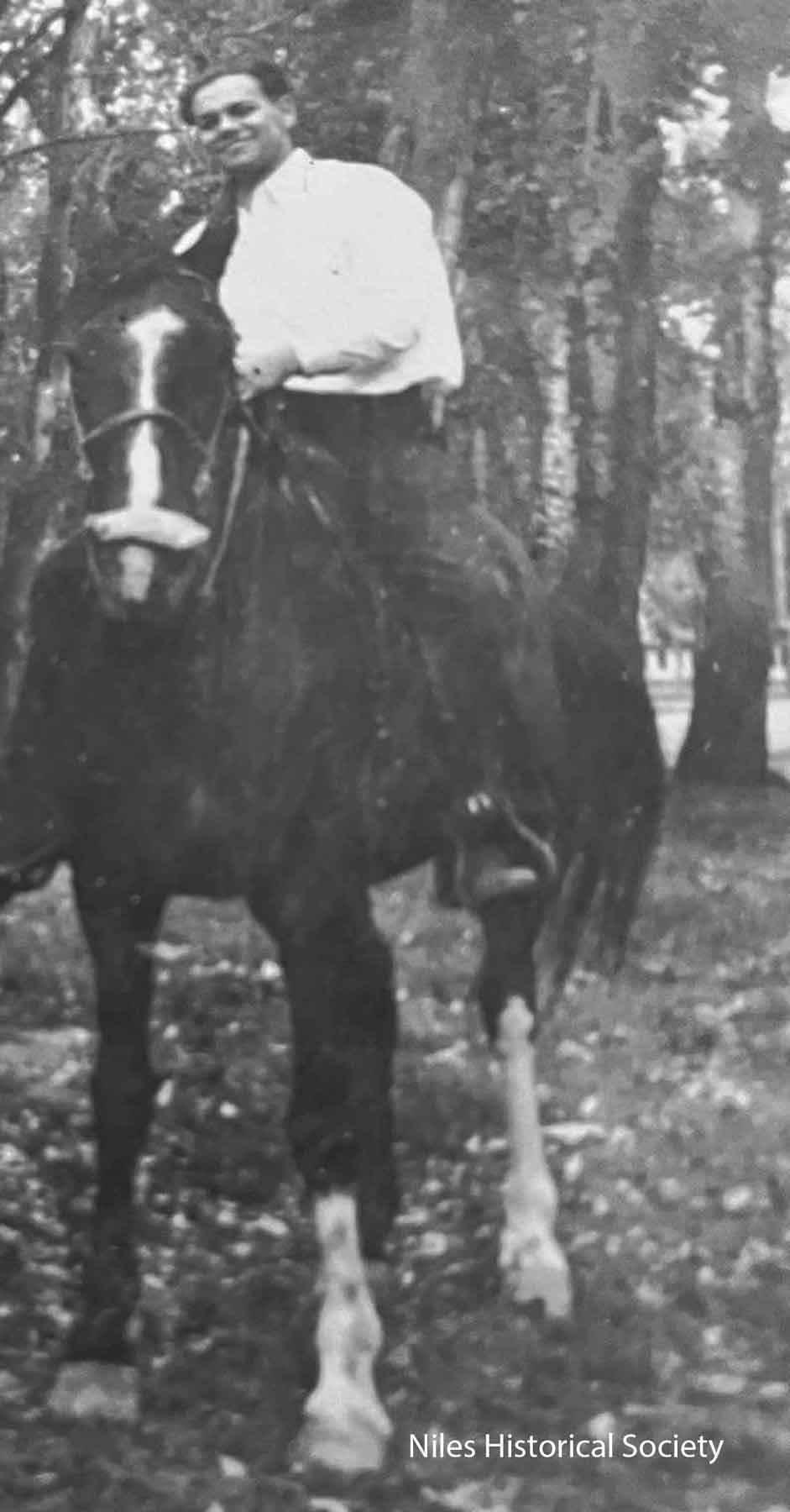
Dr. Hoodin mounted on his horse |
Niles Daily Times October 31, 1945 The horrors of the Dachau Concentration Camp and the beauty of the Riviera; displaced persons moving slowly along the highway, weary after six years of war, war sufferers living in rubble and a huge underground airplane and truck factory taken over intact. Most unforgettable horror of the war to Dr. Hoodin was the sight of 39 freight cars on a siding at Dachau, filled with dead and dying prisoners who had been 10 days without food, water or means of sanitation. Typhus was rampant and after three hospital units had been assigned to care for the Dachau prisoners they were kept under quarantine for three months. The Germans had been attempting to move hundreds of the prisoners, mostly Poles, from the concentration camp in the path of the advancing Allies, and a trip that should have meant only a few hours required ten days over tracks made almost impossible by plane raids. The Germans were beginning to burn the bodies when the Americans arrived, Dr. Hoodin said but were forced to bury them instead. The entrance to Dachau was deceiving, with an attractive sign and impressive SS barracks. Traveling the huge autobahns, which the Germans had made to be used as airstrips, Hoodin saw thousands of displaced people as they moved in a mass exodus, any direction to get away from the place where they had spent six years in starvation, as miserable slaves of the Germans. They trudged along with few belongings on their backs, picking up what little was available from the countryside as food, ragged, emaciated, with all hope lost a long time back. The first group he saw was in March, after his outfit crossed the Rhine River into the Saar region. A group of Italians and Yugoslavs who had been deserted by their captors were living in forts on the Seigfried line. After six years on a meager diet of potato soup and black bread they almost wept at the sight of white bread and what little food the small American outfit was able to spare them. “American soldiers still in Europe sometimes get the wrong impression,” Hoodin said, “They see the Germans quickly recovering, setting up businesses in the rubble of cities, starting work on their farms. They forget that Germany, well-fed, well clothed and kept in good spirits, except for bombings and two months of war in their country, fared well. Other Europeans are in rags, have been wearing wooden shoes, going without sufficient food for six years, have suffered until peace only means ‘so what’.” |
| Niles Daily Times September 5, 1947 Nine out of ten cases will recover without any ill effects, Dr. Hoodin said, and thus medicine has made great strides in combating the aftereffects of the disease. The Health Commissioner explained that polio is an acute infection, which attacks children and young adults in epidemic forms. It is characterized early, by an ordinary cold, which is hard to differentiate, and later by muscle rigidity, then paralysis within four days. During the early stages of cold, vomiting and fever is prevalent. The disease is rare in infancy and 75 per cent of the cases occur after five years of age. It also attacks persons between 25 and 39, usually parents of the youngsters, the health inspector explained. However, cases have been reported that occurred from newborn babies to adults of 70 years of age. Polio is caused by a virus, a small micro-organism, which enters via nose and throat or via the stomach. Common causes of the disease is raw milk, drinking or swimming in unsuitable water, unwashed fruits and vegetables, and mostly the fly-a definite carrier of polio. DR. Hoodin said that swimming in non-chlorinated water is extremely dangerous. Dr. Hoodin urged citizens not to minimize colds, and if the case demands, the patient should be treated by a physician. He advised avoiding crowds. There is no need to close schools or movies, Dr. Hoodin stated, and if precaution is used there will not be an epidemic of polio here, he added. |
|
|
Niles Daily Times March
29, 1947 |
|
| |
|
| Niles
Daily Times November 26, 1957 Dr. Abraham Hoodin, acting Health Commissioner since last August, is the city’s new health chief. The 47-year-old physician and surgeon was the only applicant of three who passed the civil service test for the permanent post. Dr. Hoodin officially succeeds the late Dr. Stephen Boesel who died last summer. Dr. Leonard Blum had been acting health commissioner until he resigned in August. |
|
Niles
Daily Times November 29, 1960 The Heaf test is best for mass testing Dr. Hoodin said. The test consists of a trigger-type shot which penetrates the skin, quick and painless, it leaves only six small dots on the skin. The test can be read in a few days and if the tests draw a positive reaction, the child is asked to undergo x-rays to determine if any form of tuberculosis is present. |
|
Niles
Daily Times September 25, 1962 Pointing to the immediate Trumbull County area, Dr. Hoodin stated that there haven’t been any polio patients in three years. The iron lung is going out of business he said. From a purely financial outlook, the doctor explained that the artificial breathers were costly, and it was much better for people to take the preventative vaccines than to wait for polio to strike. |
|
| |
|
| Niles
Daily Times January 20, 1966 On January 11, the first case of scarlet fever among the school’s kindergarten pupils was reported to the Health Commissioner’s office. Within two days “potentially epidemic proportions” had been reached with six scarlet fever cases and many strep throat cases on record and the kindergarten’s classes were dismissed. |
|
|
|
|