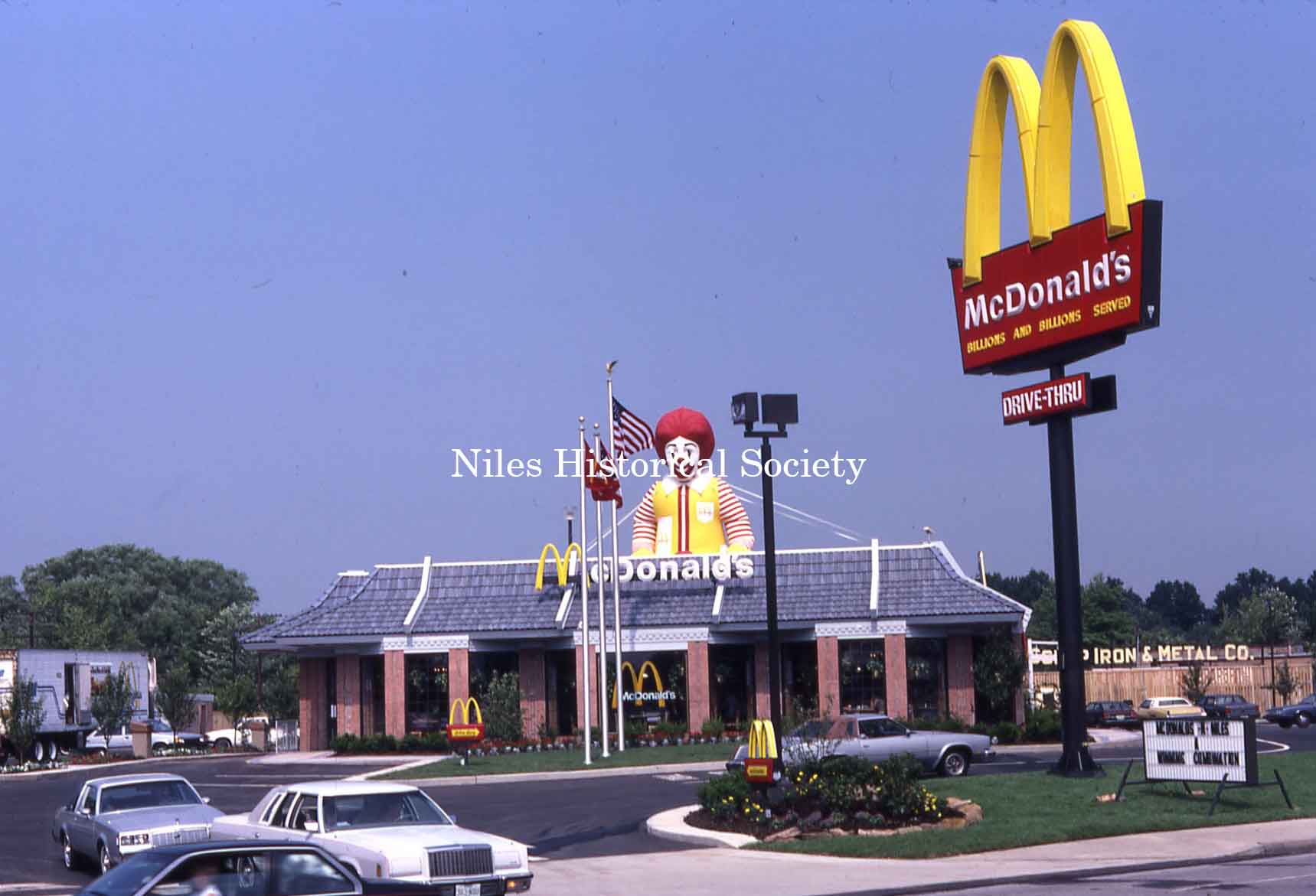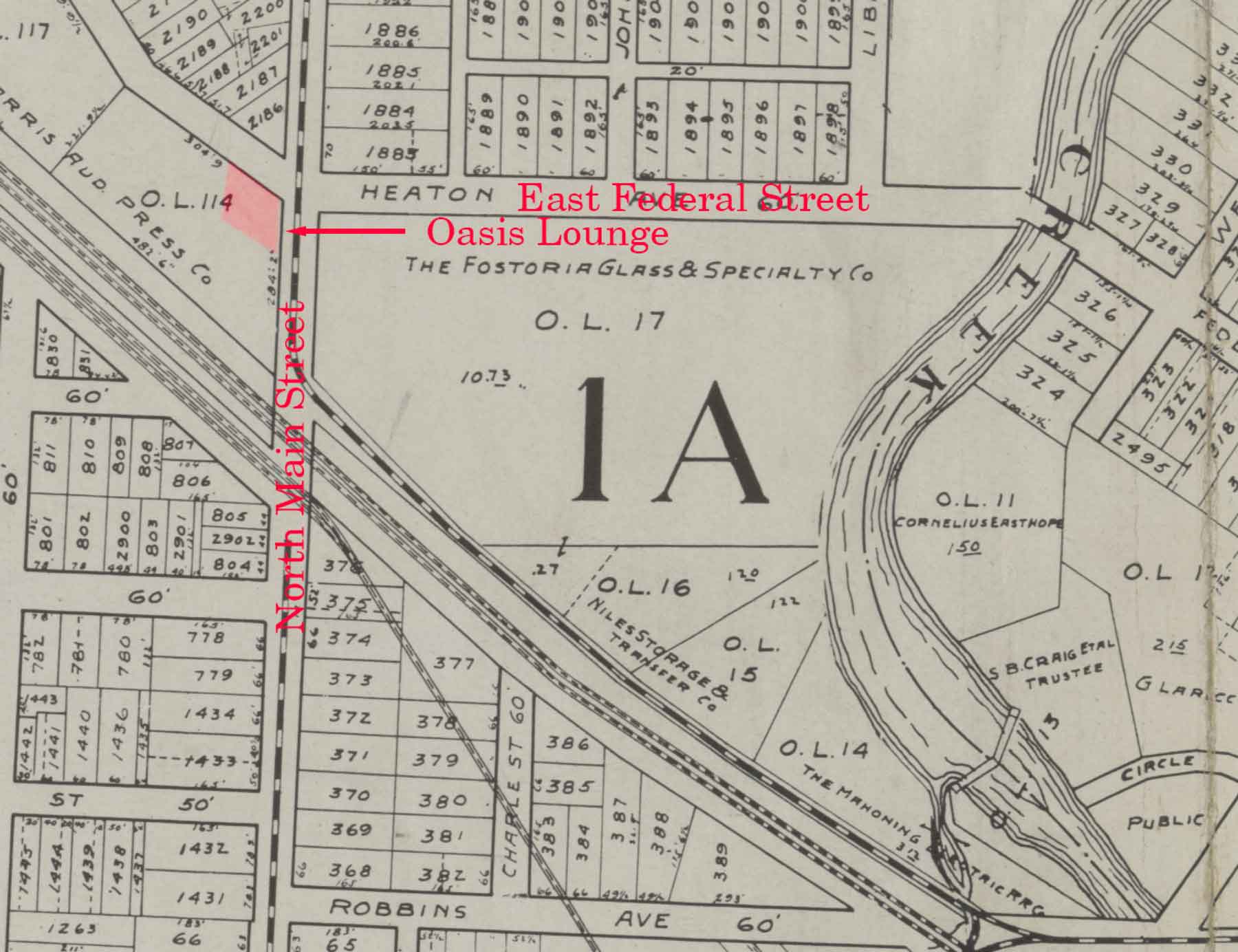
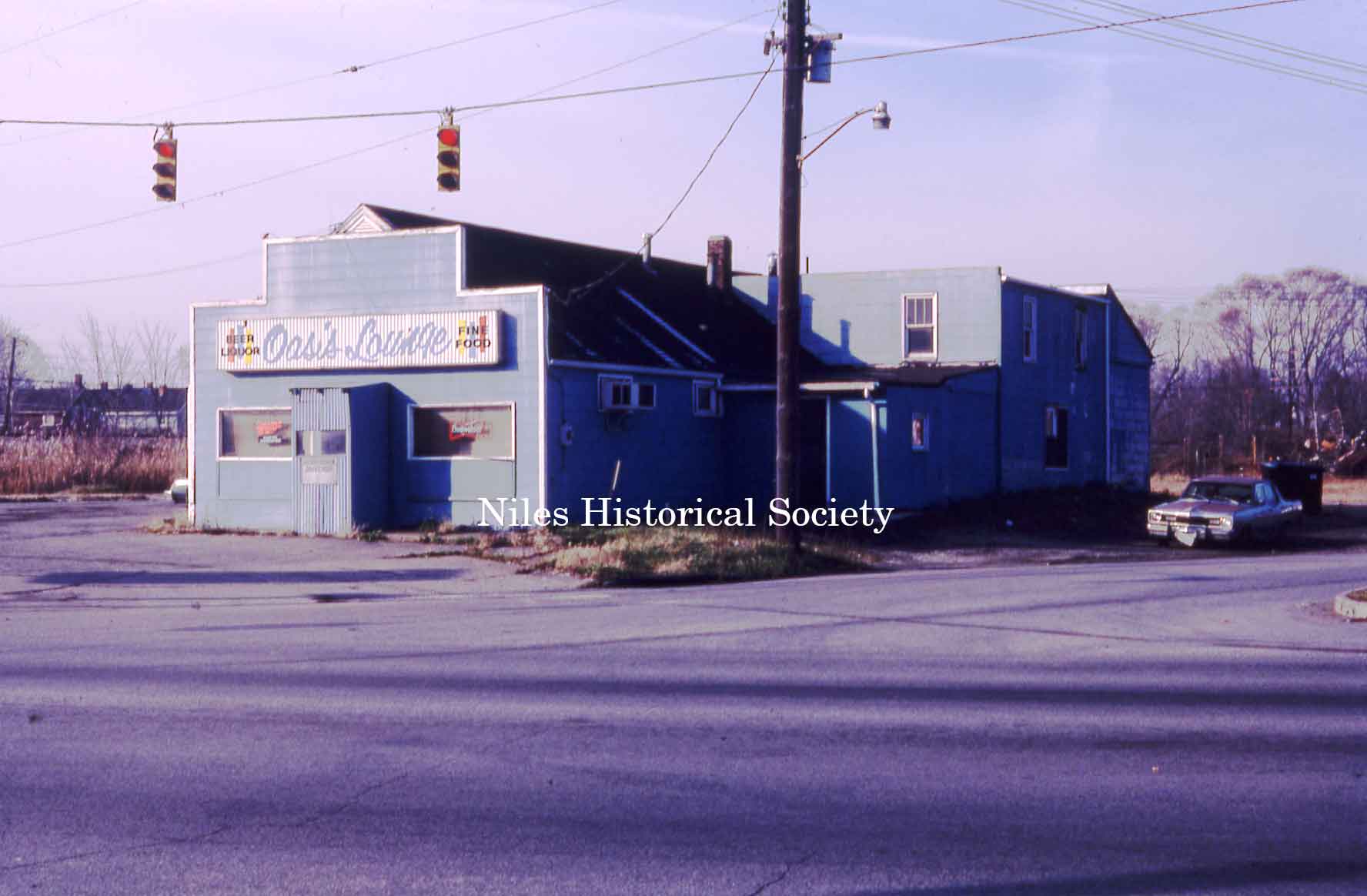
Oasis Lounge at the intersection of North Main Street and West Federal Street.
McDonalds was built on the
The location of the Oasis Lounge.
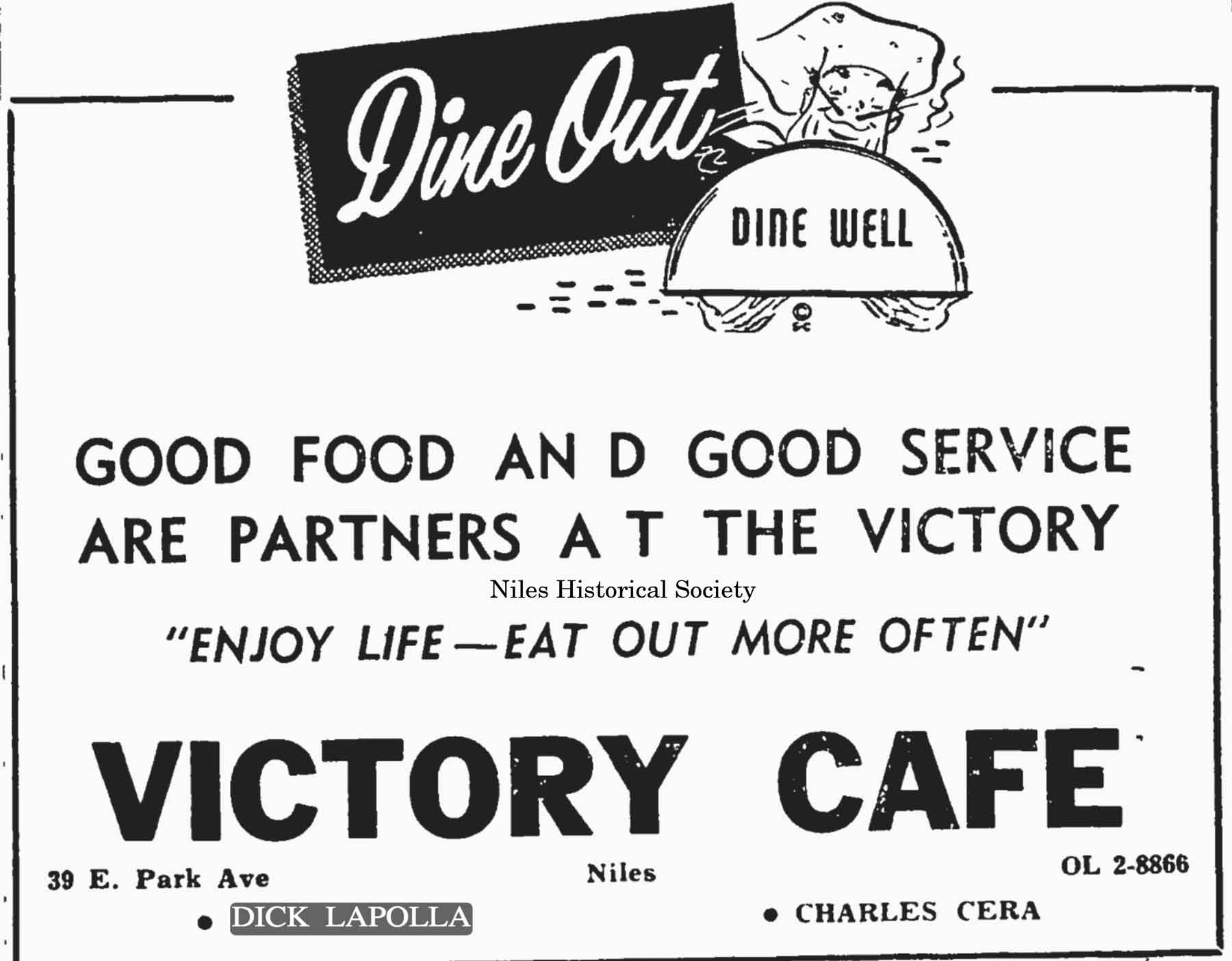
1954 advertisement for Dick LaPolla's |
Oasis Lounge. Oasis bartender has seen the area change. “Some people say people will always have
a buck or two to get a drink, but that’s not true.” No, LaPolla isn’t bitter or resentful. “You have to like the business to be in it,” he says, and he’s been behind the bar-several bars since 1946. Now 60, he has owned and operated the Oasis Lounge since 1952. He’s just a realist who sees changes in the local economy reflected by the number of people in his tavern, by the empty seats these days. “It’s not like the old days, when people were three, four deep around the bar every afternoon and evening,” he said. “Those days are gone, closed off like the steel mills. But nobody needs to be told that.” But while the amount of business in the bar may change, rising and falling with local economic conditions, the life of a bartender rings eternal. “I like to talk to people, fortunately. Always have,” LaPolla said. “You have to put up with all types of people, and you learn all the types over the years.” “The number of bad people are very, very few and you get rid of them quickly by refusing to serve them.” And the cliché, is true-bartenders are amateur psychiatrists whom people turn to with their problems. If people have problems and want to talk to somebody, they usually pile them on their bartender. “I just listen and try to relate my own experiences and others I’ve heard to try to ease their pain.” But most people flock to bars because bars are today’s greatest social outlet. Nowhere else do people meet and mingle and socialize as casually as they do in taverns. Total strangers start trading lies and secrets and their life stories within minutes of their first meeting. Dates and deals are made, friendships and acquaintances reaffirmed. “Most people just have a few drinks and maybe some food,” LaPolla said. Like most tavern owners, LaPolla is concerned about the new, tougher driving under the influence alcohol law and its harsher penalties. “That new law has them scared. Two beers and you’re drunk, according to the law. That’s crazy.” His customers are drinking less, coming out later, leaving earlier, according to LaPolla. Still this caution may not be enough to keep them out of trouble. “There’s going to be a lot of people picked up who aren’t intoxicated. I feel sorry for them.” LaPolla is director of the Trumbull County Tavern Owners Association and a trustee of the Ohio Licensed Beverage Association. The state organization employs a lobbyist in Columbus, a man who is rated the sixth most effective lobbyist in state government circles. This lobbyist naturally targeted the new driving under the influence law, but was unable to convince legislators to change the law. “They try to put the blame (for drunk drivers) on the taverns. Well, look at the gas station carry-outs.” As one local police chief said recently, “gasoline and alcohol don’t mix, so why are we selling them together.” LaPolla believes gas station carry-outs are more responsible for drinking drivers than taverns. |
| |
|
| “I guess every tavern owner is like me-if somebody’s had too much to drink, we get them a ride home. We don’t let them stagger out of here, they might damage a car in the parking lot. I’ve got too much invested here to let some stupid drunk mess it up. I watch my customers. A veteran bartender knows when to cut off somebody, knows when they’ve has too much to drink.” As one of the area’s most veteran bartenders, LaPolla has seen more than drunk driving laws change. He’s watched the times change, too; stood back behind his bar and seen the marching years stamp footprints on the face of human nature. And a barroom is a microcosm of humanity. “Back when I started tending bar, people had more consideration for each other,” LaPolla said. “Now it seems they don’t care, they’ve gotten colder. Maybe it’s home-life, I don’t know. Busted homes are probably the biggest problem for the young people today. It doesn’t make them considerate.” And it’s not just growing up between divorced parents that young men and women cry in their beer about,” according to LaPolla. Many people in their early 20s pour out the pain of their own divorces to LaPolla across the bar. “It hurts. They’re having a rough time,” the bartender said. “When I started into this, I liked it,” LaPolla said. The clock was creeping closer to noon and he expected a lunchtime rush. Unemployment may be high, but many people still work and take a break for lunch. |
|
|
|
|